
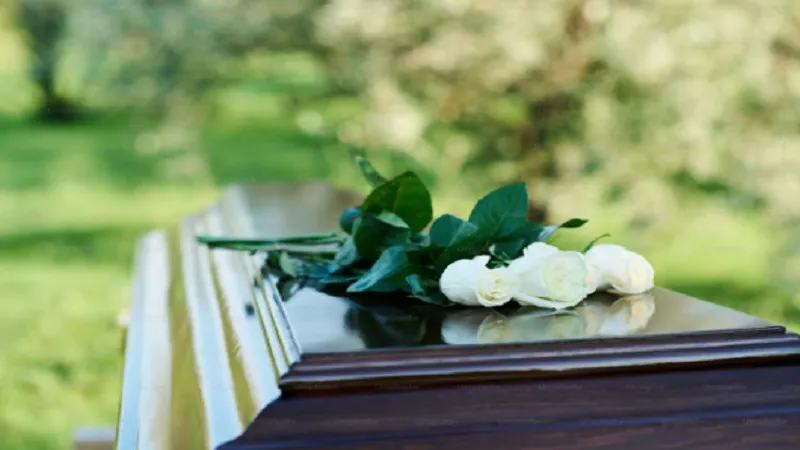
The funeral industry has always been rooted in tradition. For decades, the structure of a funeral service changed very little, with familiar formats, established rituals, and a clear sequence of events that families followed during times of loss.
But expectations have shifted.
Today’s families are approaching end-of-life planning with a different mindset. They’re more informed, more selective, and far more focused on personalisation than previous generations. Whether it’s opting for a graveside burial service in Sydney or choosing a completely non-traditional farewell, people are no longer defaulting to a standard template.
Funeral homes have had to evolve quickly to keep up.
Going Beyond One-Size-Fits-All Services.
Among the more conspicuous changes is the shift, not to fixed service packages.
Previously, the funeral homes used to provide fixed packages that combined venue rent, transportation, ceremonies, and other services. Though convenient, these packages were not necessarily what families desired.
Now, flexibility is key.
Contemporary funeral providers are making their services more modular, whereby the family can choose and select the things they like. Some might desire a full-service ceremony, whereas others might desire minimal or even custom-made.
This is a move indicative of a general desire in industries: individuals desire control. They would not simply like to be informed about what has to be offered, but rather they prefer to build their own experience.
Adopting Personalisation on all Levels.
Personalisation is among the trends that have been adopted in the funeral service industry.
Families are seeking more and more means of expressing the uniqueness of their loved ones, as opposed to using standardized models. That can be the use of favourite music, the use of personal stuff, or the selection of special places to hold the memorials.
The funeral homes are reacting by increasing possibilities.
Others are providing personalized visual tributes, even custom-made memorial stationery, and themed services that are in line with the life and interests of the individual. The others are assisting the families to organize less formal events that do not seem like more of a funeral, but rather a celebration.
The skill of the funeral director is no longer about organising but facilitating the process of selecting the options by the family; it is no longer about offering them a ready-made plan.
The Incorporation of Technology into the Process.
Technology has emerged as one of the biggest sources of change.
Many funeral homes now offer live streaming services so that their friends and family can attend. This is especially of the essence to international families who might not be in a position to travel on short notice.
Online guestbooks and tribute pages that are digital and recorded services are becoming increasingly popular. These tools can make a memorial last longer than one day, and this gives people time to come back to the memorial, reflect, and share memories with the passage of time.
Technology is also efficient behind the scenes. Digital documentation, online planning tools, and simplified communication have enabled a family to go through the process more easily at an already stressful time.
Website Response to the Cries of Simplicity.
Not all families desire a big and formal affair.
The demand is shifting toward less orthodox alternatives, direct cremation, small or late memorials. This is the sign of shifting values with regard to price and ritual.
The funeral homes are also changing to give relatively simpler services that are not about add-ons. It has become imperative that transparency is there. Families desire pricing and choices that are obvious, and the absence of upselling pressure.
It does not imply that care or professionalism is violated. It needs to be more sensitive, perhaps, but that at least.
Giving a Hand to Cultural Diversity and a Transformation in Beliefs.
Contemporary societies are more varied than ever, and funeral homes are following the trend.
The varied cultural and religious background necessitates a variety of approaches, and families have become more demanding of the funeral providers to provide respect and understanding.
Meanwhile, there is the growth of secular or non-religious services. Storytelling, reflection, and collective experiences are some of the activities that many people are opting to be part of instead of the conventional religious buildings.
The funeral homes must now be capable of maintaining the traditions and customs of certain individuals, as well as promote the absolutely new ways of remembrance.
Re-defining the Physical Space.
The funeral setting is evolving, as well.
Traditional chapels remain popular, and most funeral homes are revisiting their areas to become less cold and clinical. Lighting is getting less intense, interiors are getting less traditional, and layouts are getting more adaptable.
The desire to do away with the funeral home altogether is also on the rise.
Services are taught in parks, private homes, beaches, and other significant venues. The changes occurring in the funeral providers include increased mobility and an increased willingness to use non-traditional venues.
This is merely a basic fact: the place of a farewell can be as significant as where it occurs.
A Greater Focus on Aftercare
The bondage that existed between a funeral home and a family does not cease with the service.
Increased awareness of the need for aftercare to help families through grief is gaining momentum in the weeks and months that follow.
Most funeral homes today provide grief support, referral to counselling, and follow-up. Others have access to support groups or collaborate with mental health professionals.
This change recognizes that a funeral is only one of the many processes. Helping the family after that point develops trust and is more holistic in their approach to care.
Expectation of Transparency and Trust.
Current consumers demand transparency in all industries, and funeral services are not an exception.
Families desire to see the prices, honesty, and no hidden surprises. They will tend to do more research online before committing to any choices, comparing providers and posing more detailed questions.
By exchanging information freely, providing clear and transparent pricing, and offering explanations to their clients, funeral homes have a greater opportunity to establish trust.
This is particularly relevant in an industry where decisions are usually taken under emotional duress. Clarity also makes the family feel more assured and empowered.
Walrus to Walrus, July 1993.
Having all these changes, one is bound to wonder: is the meaning behind the traditional rituals being lost in the process of modernisation?
As a matter of fact, the reverse is oftentimes true.
Funeral homes are shifting away from stiff formats, and this is creating room to have more meaningful and personalised experiences. It does not follow an established format, but rather attempts to represent the life of an individual.
Tradition is not the default anymore, but it still exists. It’s one option among many.
- See Related: The Shift Toward Flexible Housing in Urban Areas
Future of Funeral Services.
The direction is clear.
Funeral homes are increasingly liberal, open, and sensitive to personal needs. They are fusing convention with creativity, providing both form and liberty, with the option of what families desire.
The main concept of all these transformations is a simple notion: choice.
Today, families are not seeking a service. Instead, they seek something that makes sense, something that portrays their values, their relationships, and the life that is in memory.
Those funeral homes that begin to perceive this are not only keeping up, but they are also redefining what it means to be helpful to people in one of the hardest times of their lives.