
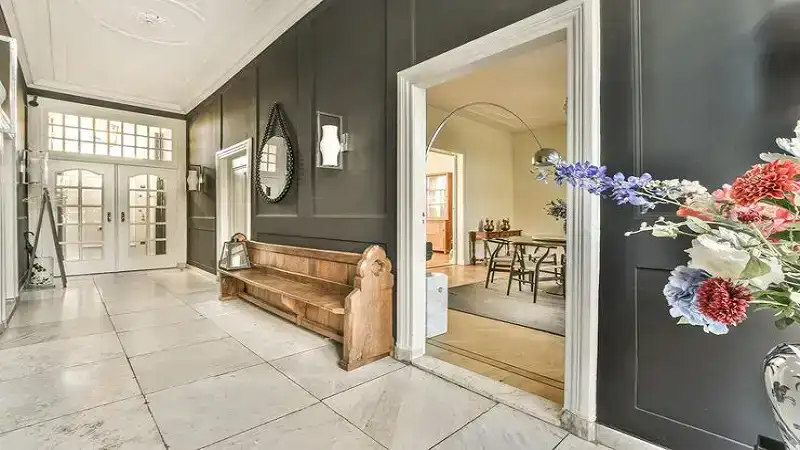
Try to see the doors in any of the most innovative commercial areas today, and you will be stunned. A functional object that was hidden and taken for granted is now a design statement, a brand promoter, and a technological interface all at the same time. The modern commercial doors aren’t simply the forgotten ones, which are placed at the end of architects’ lists, but the decisions that determine how we experience buildings, show the values of organizations, and serve the ways people work, shop, and heal.
The changes of these types are not done by chance. They are powered by the significant interior design movements transforming commercial environments deeply from their roots. We will uncover how these trends are raising the demand for such doors capable of doing more, looking better, and fitting in with how we use spaces today in an unprecedented way.
Design-Led Commercial Spaces Are Setting New Standards
There is a kind of change of fundamental nature in our understanding of commercial interiors. Corporate entities today can easily see that their physical spaces are far beyond being mere holders of the activities inside. They are the vehicles through which the companies demonstrate who they are and what they value. The very realization has lifted each and every one of the elements, doors included, from the mere background of the visual story to the intentional parts of the bigger narrative.
Aesthetic Continuity and Visual Flow
Leading commercial spaces of different kinds and locations always invite you to enter them through the firmaments of their aesthetic continuity. Their interior designers don’t spare any effort in making sure that the materials, the finishes, and the shapes all remain consistent, thus creating spaces where everything appears to be in its right place. Doors further the visual commitment and are instrumental in it.
Take a few of the most common patterns in modern commercial areas that reach such a level of unity of design:
- Structures of minimal proportions and surfaces that don’t stand out but blend with the walls instead of cutting them
- The quality of the finish has been carefully selected to either contrast or harmonize with the surroundings
- Transitioning without visible changes from one zone to another, which feels quite natural rather than shocking or abrupt
While working with professionals such as Ali & Shea, you benefit from the proficiency of people who acknowledge the role of doors in spatial storytelling. Every item has to earn its keep in making that integrated look, and doors must do it too.
The designers’ focus, which is brought about by their striving to achieve aesthetic continuity, makes it impossible to work with just any door from a standard catalog. The doors have to be part of a solution that is in line with their concept, thereby making an atmosphere of support instead of one of rejection.
Brand Expression Through Design
I mean, how can this be more exciting: doors have turned into brand touchpoints. In offices, hotels, and retail settings, they’re usually the first few physical things people come in contact with. That moment of connection, whether it is actually doing the action of pulling a handle, watching a door slide open, or just seeing how light reflects on the surface, leaves a certain feeling that supports or opposes brand values.
To illustrate the point, a tech startup may align by choosing ultra-modern glass doors with minimalistic hardware to represent their innovation and transparency to the public. Conversely, a law firm could decide to use wood doors that are hefty and richly detailed to show that they are stable and trustworthy. A boutique hotel may be picking locally made doors that resonate with the property’s visually distinctive aesthetic identity. The point is these are not random selections, instead, they are tactical moves on how a room can convey different communicative levels to a customer.
Transparency, Light, and Flexible Layouts
The growing demand for commercial doors is majorly influenced by one prominent trend, that is, a demand for spaces filled with natural light and that can easily be transformed. The old-fashioned, tightly packed offices and retail spaces of the last decades are being replaced by more fluid and adaptable ones.
Glass and Glazed Door Systems
One of the major reasons that has led to an upsurge of glass doors is the way they have solved a long-standing issue in the design of separation, which is “how to keep the required separations without giving a closed-off feeling.” The solution comes from transparency, which, at the same time, maintains the function and improves the users’ experience.
This is where glass doors are used to revamp the environments and can be found in a wide range of different sectors:
- Corporate offices where collaboration is valued, but focused work still requires quiet zones
- Healthcare facilities that balance the need for patient privacy with staff visibility and monitoring
- Retail environments where visibility drives engagement and invitation
Besides the aesthetic appeal, the usage of glass doors brings the following advantages to users:
- Natural light is more evenly distributed within interior spaces, contributing to energy cost reduction and people’s well-being.
- Space is enhanced, thereby making environments more spacious and open.
- Visual connection that, on one hand, keeps teams motivated and, on the other hand, customers interested without giving up the necessary
decision-making in choosing the suitable commercial door hardware for glass systems should not be taken lightly. This is because the hardware needs to enhance the transparency and provide good functioning to
Supporting Agile and Multi-Use Spaces
The environments of modern businesses have to change their looks and functionalities within hours. Conference rooms are turned into training spaces and then into team workshop areas. Retail floors change their looks for different product launches. Healthcare facilities modify their rooms to meet the varying needs of patients.
Such a need for flexibility has led to a wide range of options in folding, sliding, and movable walls, which help in the expansion or contraction of spaces depending on the needs of people. These are not any kinds of solutions that people have to make compromises, they are just advanced systems that maintain the aesthetic quality while providing the operational versatility. The importance of doors in this flexibility cannot be emphasized enough, as they are the means by which the transformation becomes a reality.
Performance-Driven Design Expectations
Despite the focus on aesthetics, spaces in commercial areas should not compromise their performance. Actually, the best contemporary designs discover ways through which the functional demands can highlight rather than weaken the visual goals.
Acoustic and Privacy Solutions
Open-plan designs have gained lots of popularity, and for quite good reasons too. Such designs facilitate collaboration, help in lowering construction costs, and create lively environments. However, at the same time, they pose serious problems, especially in the areas of sound control and privacy. This is where doors, engineered for performance, become the ones without which the task is unachievable.
Some of the new features that a modern commercial door is expected to deliver are:
- Sound insulation for rooms where confidential discussions are held
- Privacy in highly secured areas like executive or clinical spaces, where sensitive matters are discussed or treated
- Adherence to building and safety regulations that ensure the protection of occupants and limit the risk of liability
One of the great things about modern door design is that these performance factors do not necessarily ask for a compromise of aesthetics. Doors may appear sleek and minimal while at the same time housing highly advanced sealing systems, core materials, and construction techniques that facilitate measurable acoustic performance.
Durability and Compliance
Business settings are an environmental challenge for doors. Places that have a lot of traffic and are used in such a manner can witness doors being opened hundreds or even thousands of times daily. A door that functions wonderfully on its first day must still be capable of delivering reliable performance years later, when it is subjected to use and abuse.
Designers and specifiers are putting more and more:
- Apart from that, they put impact-resistant materials on top of their priority list to help maintain the looks of objects even if these parts have been heavily used for a long time.
- In the same vein, they place an emphasis on the necessity of systems that are fire-rated and code-compliant, meeting safety requirements while at the same time not drawing attention to the protective function that is being carried out.
- By the same token, they stipulate that low-maintenance finishes should be resistant to wear, cleaning chemicals, and environmental factors.
All of these stipulations serve as an assurance that the doors are contributing not only toward the realization of the immediate design intent but also to the value of long-term operations. The very first commitment to quality will be paid back gradually by the reduction of maintenance, lengthening of replacement intervals, and the appearance that is kept intact.
Sustainability and Smart Design Integration
The coupling of technology and sustainability is probably the single most significant factor that leads to the redefinition of how commercial doors are specified. The two factors are not separate; rather, they are increasingly seen as the two main reasons for design decisions.
Eco-Conscious Materials and Certifications
There has been a growing demand for environmental responsibility in commercial projects over the last few years. The impetus for this demand is coming from several fronts: corporate sustainability commitments, green building certification programs, tenant expectations, and regulatory requirements.
Doors make those goals possible by:
- Using materials that can be recycled or sourced in a responsible way, which helps to reduce the environmental impact
- Low-VOC finishing that does not release harmful substances and thus assures clean indoor air
- Doors meeting the criteria of green building standards, such as LEED, WELL, and Living Building Challenge
One of the coolest things is how the producers responded to that. Eco-friendly alternatives are no longer few and visually less attractive; they are even leading design innovation and therefore provide attractive solutions serving both environmental and aesthetic goals.
Integration with Smart Building Systems
Another limit to explore in commercial architecture is the introduction of technology-enhanced doors. With the advancement of smart and more efficient buildings, doors are now more and more connected to systems that facilitate access, monitor usage, and optimize performance.
Nowadays, commercial doors are able to facilitate:
- Access control and security integration that determines those people who can enter which areas and when
- Touchless operation in hygienic environments where prevention of contamination should be through surface contact
- Energy-saving through better sealing, run by preset schedules, or linked to HVAC systems
Not one of these high-tech features is apparent to the eye. The most sophisticated doors maintain a neat and straightforward look while embedded with complex features for the achievement of the operational objectives. It’s a kind of invisible intelligence that upgrades the experience without complicating the user interface.
Conclusion
The need for contemporary commercial doors is a manifestation of something more profound: the essential rethinking of the appearance, feeling, and functioning of commercial spaces. The reason why doors have become a focal point of designers’ attention is that aesthetics, performance, and sustainability, the three forces that characterize modern commercial environments, are the areas where doors operate.
Given that interior spaces become more recognizable brands, more flexible, and more experience-focused, doors no longer depend on their traditional function as mere barriers. They are design assets that determine the operations and the atmosphere of the spaces, thus adding to the brand’s visual identity, accommodating different operational needs, and offering sustainable ways through the right selection of materials and proper construction.