The best family kitchens do three jobs at once: they feed people, hold life, and prevent chaos. Kids need a spot for homework. Adults need clear prep space. Pets need a plan that keeps them out of danger.
That last part gets missed. A kitchen is full of hot pans, sharp tools, open dishwashers, and wet floors. Add a dog underfoot and you get spills, trips, and stress. Layout can fix most of it.
This guide focuses on space planning that supports real family flow: a homework island, safe traffic lanes, smart storage, and a pet zone that protects everyone.
Start with three lanes: Cook lane, kid lane, pet lane
Picture your kitchen as three lanes that should not collide:
- Cook lane: sink → prep → hob/oven → fridge
- Kid lane: entry → snack/drink → island homework → exit
- Pet lane: water + feeding + “place” zone that sits out of foot traffic
When these lanes overlap, you feel it at 5pm. Kids cut through the work zone. Dogs trail behind people’s feet. Adults pivot with hot food. The goal is not more space. The goal is clean routes.
A simple rule: no main walkway should cut through the cook lane. The National Kitchen & Bath Association (NKBA) guidelines also warn against major traffic crossing the core “work triangle.”
Plan the clearances first, then add features
Families try to “fit” an island, then squeeze aisles. That creates pinch points where people and pets bunch up.
Use clearance targets as your guardrails:
- Work aisle: at least 42 inches for one cook, 48 inches for two or more cooks
- Walkway: at least 36 inches
- Behind island seating: 32 inches if nobody passes behind seats, 36 inches to edge past, 44 inches to walk past
Build an island that supports homework without blocking dinner
The island can be your family command centre, but only if it is planned as a dual-use station.
What works for homework at the island
- Seating on the side that does not face the hob
- A drawer stack for pencils, chargers, and school papers
- A shallow “drop zone” tray so homework stays off prep boards
- Power points on the island end panel (or pop-up outlets)
- Clear sight lines from hob to island so you can supervise without leaving the cook lane
What to avoid
- Seating that forces kids to sit in the main walkway
- A dishwasher that opens into the homework lane
- A fridge door that swings into the seating zone
If you want a simple test: open the fridge, open the dishwasher, and pull a stool out. If you can still walk past without turning sideways, you are close.
Design for pets: stop the “underfoot” risk at the source
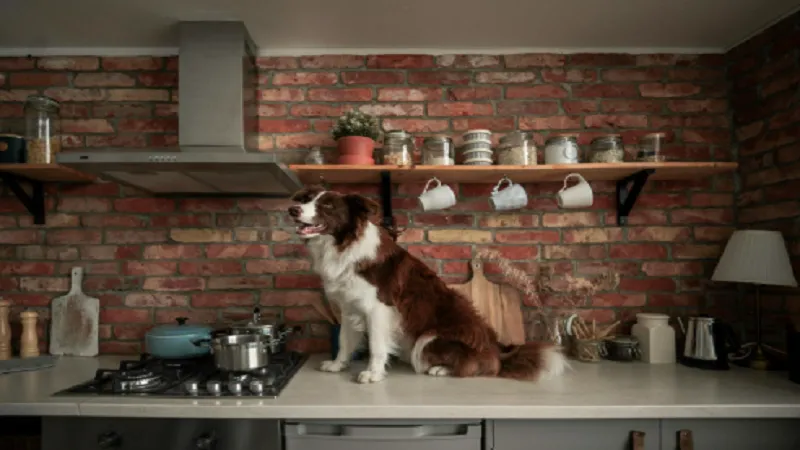
The kitchen is the heart of the home, but it’s also a high-traffic hazard zone. If you have a larger breed like a Mastiff, letting them roam freely can be a serious roadblock towards getting anything done. A smaller breed like a Shih Tzu can also get trampled in a dinner rush when there are too many people busy with doing tasks.
Designing a recessed feeding station or a designated ‘place’ command zone keeps your pup safe from hot spills and gives you room to breathe while cooking.
A dog in the cook lane creates three risks:
- Hot spills from trip hazards
- Knife drops when people react fast
- Food theft from counters, bins, and open dishwashers
This is where a built-in plan beats a house rule.
Option A: Recessed feeding station (built-in)
Best locations:
- The end of a cabinet run, outside the work aisle
- A niche at the edge of a pantry wall
- The “dead corner” near a back door that leads to a mat area
Features that help:
- Pull-out bowl drawer for food and water
- A lip or tray to catch splash
- A washable wall finish behind the bowls
- Space for a sealed kibble bin in the base cabinet
Skip placing bowls in the main aisle. Water on tile plus kid traffic is a slip hazard.
Option B: The “place” zone (training + layout)
This is a small, clear spot where the dog goes during cooking. It works best when the spot is:
- Visible from the hob
- Out of the prep triangle
- Away from the bin and fridge
Set it up with a mat or bed and make it part of the routine. The layout supports the training. The training protects the layout.
If you need a physical boundary for early stages, use a gate, a pen, or a half door. A dog does not need free access to the cook lane.
Make storage match real family behaviour
A clean kitchen stays clean when storage is placed where mess starts.
Put “kid access” in one zone
Create a snack and drink zone away from the hob:
- Low drawer for lunch boxes
- Shelf for cups
- Water bottle station
- One bin for wrappers
This reduces the kid lane crossing the cook lane.
Hide the mess with closed storage
Open shelves look nice, but families collect clutter. Use doors for the bulk, open shelves for a few daily items.
Pick surfaces that forgive spills, paws, and school bags
Layout is step one. Materials keep the plan working.
Good family-kitchen choices:
- Mid-tone floors that hide crumbs
- Matte finishes that mask fingerprints
- Easy-clean splashback behind the pet station
- A runner at the entry to catch dirt and water
If your dog drinks like a camel, plan a water mat that does not slide. Place it in the pet lane, not the walkway.
A fast “tape test” before you commit
Grab painter’s tape and mark:
- Appliance door swings
- Stool pull-out space
- The 42,48 inch work aisle zone
- The dog “place” mat location
Then run a real drill: one person cooks, one person walks through, one kid sits at the island, and the dog lies on the mat. If it feels tight now, it will feel worse at dinner time.
Closing thought
A family kitchen does not need to be huge. It needs to be planned. When you protect the cook lane, give kids a clear homework hub, and build a pet zone that keeps a Mastiff out from under hot pans, the whole room changes. Dinner gets calmer. Homework gets easier. Your dog stays safer. Your kitchen starts to feel like the heart of the home, not the stress point.