

Parenting hacks are most useful when they solve a real problem without creating three new ones. The current FamousParenting material focuses on small changes for busy families, including preparation, routines, meals, sleep, organization, and short self-care practices. Those ideas become more useful when they are matched with established child-development guidance rather than treated as universal rules.
The most practical way to use fpmomhacks parenting hacks from famousparenting is to start with one recurring problem, identify what is driving it, and test one simple change for several days. A visual morning checklist may help a child who forgets steps. A predictable bedtime sequence may help a child who struggles with transitions. Clear, age-appropriate directions can reduce repeated instructions. The goal is not a perfect household. It is a routine that works well enough to repeat.
What Parents Are Really Looking For in a Parenting Hack
A good parenting hack should remove friction, not simply make a parent work harder. Before trying one, ask three questions: What keeps going wrong? When does it happen? What can I change before the problem starts?
For example, if mornings are difficult because shoes, school papers, and water bottles are always missing, the answer may be an organization system rather than a discipline strategy. If bedtime becomes difficult after screens, the better starting point may be a predictable wind-down routine and a clear family media boundary.
This problem-first approach also prevents a common mistake: copying a tip because it looks clever online without checking whether it fits the child’s age, temperament, or needs.
1. Prepare the Night Before
One of the simplest ideas in fpmomhacks parenting hacks from famousparenting is moving avoidable decisions out of the busiest part of the day. Choose clothes before bedtime, place school items in one location, and prepare whatever can safely be prepared in advance.
The benefit is not that a family suddenly becomes perfectly organized. The benefit is that fewer decisions are competing for attention in the morning. A child can also take part by checking a short picture-based list or putting their own bag in the launch area.
Keep the system small. One basket for school items can be more useful than a complicated storage project that nobody maintains.
2. Use Clear Directions Instead of Repeating Yourself
“Get ready” is easy for an adult to understand but can be vague for a young child. CDC guidance recommends getting a child’s attention, giving a simple direction that fits their age, and telling them what to do rather than only what to stop doing. One direction at a time can also make it easier for toddlers and preschoolers to respond.
Try changing “Stop making a mess” to “Put the blocks in the basket.” After the child follows the direction, describe what went well: “You put the blocks away when I asked.” Specific praise helps children understand which behavior you want repeated.
This is more than a wording trick. It turns a vague demand into a task the child can understand and complete.
3. Make Routines Predictable, Not Rigid
Another useful principle in fpmomhacks parenting hacks from famousparenting is to make repeated parts of the day easier to anticipate. CDC guidance says consistent routines and rules can help children know what to expect, while consistency, predictability, and follow-through help create structure.
A routine does not need to happen at exactly the same minute every day. Think in sequences. Wake up, get dressed, eat, brush teeth, pack the bag, leave. The order can become familiar even when the clock changes.
This distinction matters. A flexible routine can survive a late appointment, a sick sibling, or a difficult morning. A rigid schedule can turn an ordinary disruption into another source of conflict.
4. Build a Bedtime Sequence Children Can Recognize
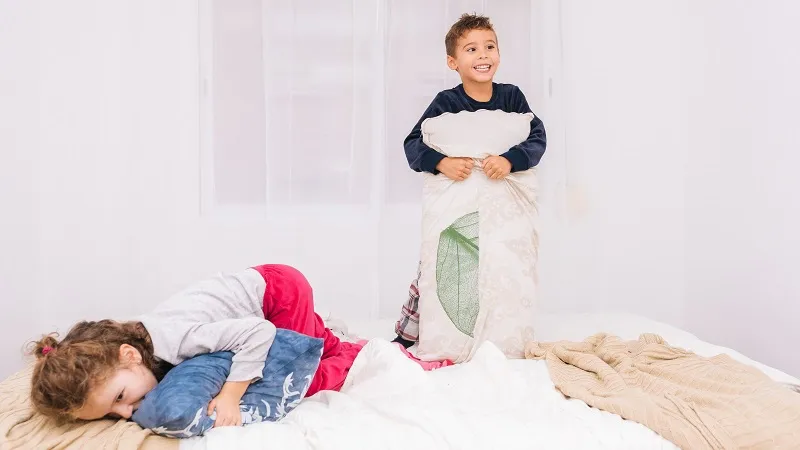
Bedtime is often easier when parents stop treating each night as a fresh negotiation. The American Academy of Pediatrics recommends a predictable bedtime ritual and highlights a simple “Brush, Book, Bed” sequence for young children.
You can adapt the sequence to your family: bathroom, pajamas, teeth, book, brief conversation, lights out. The exact activities matter less than making the order familiar and keeping the routine reasonably consistent.
The same principle appears in fpmomhacks parenting hacks from famousparenting, where simple sleep cues are presented as a way to reduce friction. Treat those cues as practical routine ideas, not guarantees that a child will fall asleep quickly. Sleep problems can have many causes, and persistent concerns deserve professional advice.
5. Give Children a Safe Amount of Independence
A useful parenting hack should not turn the parent into the manager of every tiny task. Give children jobs they can realistically handle. A preschooler might put toys in a basket. An older child might pack a school bag from a checklist. A teenager may manage more of their own schedule.
Start with one responsibility and make the expected result clear. If the task fails, teach the missing step instead of taking over immediately.
The point is not to make children independent before they are ready. It is to give them repeated chances to practise skills while an adult remains available for support.
6. Make Mealtimes Less of a Negotiation
Food can become one of the biggest daily battles, especially when a child is selective. A practical version of fpmomhacks parenting hacks from famousparenting is to reduce unnecessary decisions for the parent while avoiding pressure on the child.
A simple meal structure can help: serve a familiar food alongside the rest of the meal, keep portions manageable, and allow the child to participate in age-appropriate preparation. Avoid turning every bite into a test of obedience.
Be careful with online food “hacks.” A trick that makes a child eat something once is not necessarily a healthy long-term strategy. If a child has significant feeding difficulty, pain, gagging, weight concerns, or an extremely limited diet, discuss it with a pediatrician or another qualified health professional.
7. Use Praise That Tells Children What They Did Right
General praise such as “Good job” is positive, but specific praise gives children clearer information. CDC guidance recommends labeled praise that identifies the behavior you liked.
Instead of “You’re being good,” try “You waited while your brother finished talking.” Instead of “Nice cleaning,” try “You put the books back on the shelf.”
This is one of the easiest ideas to use because it does not require a chart, app, special purchase, or long conversation. Notice the behavior you want more often, name it, and move on.
8. Handle Minor Attention-Seeking Behavior Carefully
Not every behavior needs a long explanation. CDC guidance notes that redirecting attention can reduce some minor, attention-seeking behaviors, but it should only be used when the behavior is safe and not caused by distress or an unmet need. When the unwanted behavior stops, positive attention can be returned to the behavior you want to encourage.
This gives fpmomhacks parenting hacks from famousparenting an important safety boundary. Ignoring is not a general solution for tantrums, fear, pain, aggression, or dangerous behavior.
For a safe but irritating behavior such as repeated whining for attention, a parent can stay calm, avoid a long argument, and then respond warmly when the child uses an appropriate way to ask.
9. Create a Family Screen Routine

Screens become harder to manage when every request turns into a negotiation. The American Academy of Pediatrics recommends creating a family media plan that reflects the family’s routines and values. Suggested boundaries can include screen-free areas, turning off autoplay and notifications, choosing appropriate content, and making room for sleep, reading, outdoor play, and family interaction.
A useful household rule should be visible and predictable. For example, devices may stay away during meals, or entertainment screens may end before the bedtime routine begins.
The most important part is that adults follow the plan too. Children learn from what parents repeatedly do, not only from what parents say.
10. Pack a Small Backup Kit for Outings
Many family emergencies are not serious emergencies. They are ordinary inconveniences that become stressful because the family has no backup.
A small outing kit can contain age-appropriate spare clothes, tissues or wipes, a snack if appropriate, water, and one quiet activity. Adjust it for the child’s age and the trip. Avoid carrying unnecessary items simply because an online list says you should.
Community discussions about parenting hacks often show why these small systems are popular: parents are trying to reduce the number of decisions they must make while handling children in public.
The useful lesson is not to copy another parent’s exact bag. It is to identify the two or three problems your family repeatedly faces away from home and prepare for those.
How to Choose the Right Hack for Your Family
Not every parenting tip deserves a place in your routine. Use this quick filter before adopting one.
First, check the child’s age. A strategy that works for a school-age child may be inappropriate for a toddler.
Second, check the goal. Are you trying to save time, teach a skill, reduce conflict, or improve organization? A tip should have one clear purpose.
Third, check the trade-off. If a “shortcut” saves five minutes but creates a daily power struggle, it may not be a useful shortcut.
Fourth, test one change at a time. If you change bedtime, meals, screen rules, and morning routines on the same day, you will have difficulty knowing what helped.
Finally, stop using a strategy when it is unsafe, causes distress, or clearly does not fit your child. Parenting advice is not a substitute for individualized medical, developmental, or mental health guidance.
A Simple Seven-Day Parenting Hack Test
A practical way to use fpmomhacks parenting hacks from famousparenting is to run a small experiment instead of attempting a complete family overhaul.
On day one, write down the problem in one sentence. For example: “Our morning routine takes too long because everyone searches for school items.”
On day two, choose one change, such as a single launch area for bags and shoes.
For the next several days, keep the change consistent. Notice whether the problem happens less often, whether the child can complete more steps independently, and whether the system creates new stress.
At the end of the week, keep it if it helps. Adjust it if it almost works. Drop it if it does not fit. Then choose the next problem.
This approach makes parenting advice measurable without pretending that family life can be controlled like a laboratory.
What Parenting Hacks Cannot Fix
Some problems are not organization problems. A checklist will not resolve a child’s persistent sleep difficulty, developmental concern, severe anxiety, feeding problem, repeated aggression, or safety issue.
That is where responsible parenting content needs to stop short of diagnosis. A parent can improve routines and communication while still seeking professional help when something seems outside the range of ordinary family stress.
FamousParenting’s own recent content presents practical routines and everyday tips as part of a wider parenting resource. Its homepage also includes parenting, toddler, mom-life, and family-life material.
The strongest way to use fpmomhacks parenting hacks from famousparenting is therefore as a source of practical ideas, while checking health, safety, development, and behavior claims against qualified authorities such as the CDC and American Academy of Pediatrics.
The Bottom Line
The best parenting hack is usually not the cleverest one. It is the small change your family can understand, repeat, and adjust.
Start with one recurring problem. Make the expected behavior clear. Prepare the environment when possible. Use predictable routines. Give specific praise. Keep screen and bedtime boundaries understandable. Most importantly, match the strategy to the child’s age and needs.
Parenting becomes more manageable when useful ideas are turned into simple habits rather than another long list of things a parent feels guilty about not doing.
Frequently Asked Questions
What makes a parenting hack genuinely useful?
A useful parenting hack solves a specific recurring problem without creating unnecessary work or conflict. It should be realistic for the child’s age, simple enough to repeat, and flexible enough to fit normal family life.
Should parents try several parenting hacks at once?
Usually, it is better to start with one. Changing several routines simultaneously makes it difficult to determine which change helped. One small experiment also feels more manageable for both parents and children.
How can parents make mornings easier?
Prepare predictable items the night before, such as clothing, school bags, and commonly needed supplies. A simple checklist or designated launch area can also reduce searching and repeated reminders.
What is a good way to improve bedtime?
Create a predictable sequence that happens in roughly the same order each evening. The American Academy of Pediatrics recommends a simple Brush, Book, Bed routine for young children.
How should parents respond when children do not listen?
Get the child’s attention, give one clear and age-appropriate instruction, and explain what you want them to do. Follow through consistently and use specific praise when the child cooperates.
Are parenting hacks suitable for every child?
No. Children have different ages, personalities, developmental abilities, needs, and family circumstances. A strategy that works well for one child may be ineffective or inappropriate for another.
When should parents seek professional advice?
Parents should seek qualified help when a concern involves safety, significant developmental differences, persistent feeding or sleep problems, severe emotional distress, repeated aggression, or symptoms that interfere with everyday life. See More