
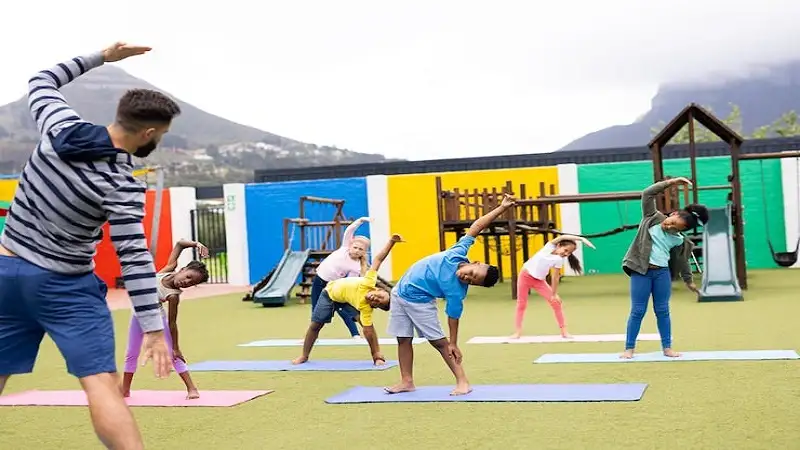
Designing an outdoor play area is hardly just about setting up a few swings and slides. One must plan wisely to make a place that promotes physical development, creativity, and social interaction. Getting a good layout significantly benefits children’s development in confidence and coordination as they have fun with active play.
Understanding the Purpose of Play
Play is a very crucial component of early childhood development. It not only strengthens the body and improves balance and motor skills but also enhances emotional and cognitive aspects. Thinking about how different play activities aid the development process can be of great help in making a play area.
Giving a wide selection of challenges is a good way of accommodating kids of various ages and capabilities. A combination of climbing, balancing, and pretend play options will not only keep the area more fun but also less exclusive.
Adding Safe and Playful Playground Equipment
Playground equipment safety and fun have to go hand in hand. First, the playground equipment must be fabricated using durable materials, its surfaces must be smooth, and the location should be such that the damage resulting from a fall would be minimal. Ropes, bridges, and climbing walls are installations that encourage kids to move around and thus foster their physical coordination and inner confidence.
If you are planning on a large community or school playground, commercial playground equipment is the ideal option for you, as it is safe and durable. These playgrounds can be made to fit the age of the children, the space available, and the overall design goals.
Designing Movement and Exploration Features
The composition of the playground layout should basically be a motivator for continuous movement. Through pathways, fields, and changes of scenes, kids are enabled to move around, jump, and push their limits in a very safe manner. In addition to active areas, it is also essential to provide a couple of quiet zones that would allow kids to have their rest and activities reflection.
- Zones for climbing will allow children to develop their upper body muscles and
- Slides and tunnels are great for keeping kids balanced and aware of their environment.
- Sand or water areas engage children’s sense of touch and give them a medium to express their creativity.
- Seats under the trees are good spots for chatting and also keeping an eye on the kids.
If these components are put together in an intelligent way, kids will be able to move from one activity to another smoothly without having to worry about getting too close or having an accident.
Considering Accessibility and Inclusivity
Everyone, not just a few, is genuinely welcomed into a successful play space. Accessibility is such a core value that children with different abilities are able to participate in activities with ease and fun, and it is a result of the accessibility that is well planned and implemented right from the start. Ramps, transfer platforms, and elements filled with senses offer experiences that include everyone, and hence participation is on a level playing field.
The kind of ground surface is another factor that comes into play. Soft rubberized materials or engineered wood fiber provide showering while also permitting wheelchair access. Design that is inclusive not only promotes social adjustment among children but also develops empathy, thus strengthening the social fabric of the community.
Integrating Natural Elements
The addition of natural elements can make a play space a real adventure spot. Play with the imagination is greatly increased as it is a result of the integration of trees, logs, and boulders; at the same time, children are helping the environment by being in such close contact with nature. Gardens or grassy mounds not only add variety and visual interest but also help to create a greater sense of awareness of the environment.
Natural materials also contribute a harmonious element to the appearance and the feeling of man-made metal or plastic structures, thus making the whole area more appealing and peaceful. This mix of nature and design is a great way to provide opportunities for physical activity and mental health.
Maintenance and Longevity
Keeping the area safe and pleasant through regular maintenance is a good practice. Routine inspections should be planned to check for wear, loose bolts, or surface damage. Using top-grade materials and weather-resistant coatings are ways to prolong the life of the structures so that the spaces can be enjoyed by future generations without needing major repairs.
Basic maintenance, such as washing the surfaces and keeping an eye on the drainage system, can be very effective in preventing risks as well as sustaining the visual appeal. Ongoing maintenance not only ensures safety but is also a strong indication of community pride and commitment.
Building Spaces That Inspire Active Play
Urban outdoor play areas that incorporate well-thought-out and balanced elements have the potential to nurture a child’s development, stimulate creativity, and establish social ties. Through the integration of fun and challenging equipment, natural environment, and strategies for easy accessibility, a community can possess a place that promotes physical activity and adventurous behavior in children of all ages.