
Urban living has always been shaped by constraints, limited space, rising property prices, and growing populations. But in recent years, something has started to shift. Instead of simply adapting to these pressures, people are rethinking how housing works altogether.
Flexibility has become the defining feature of modern urban housing. It’s no longer just about having a place to live; it’s about having a space that can evolve alongside changing needs. Whether that means accommodating family, creating income streams, or simply improving day-to-day functionality, the demand for adaptable living solutions is only accelerating.
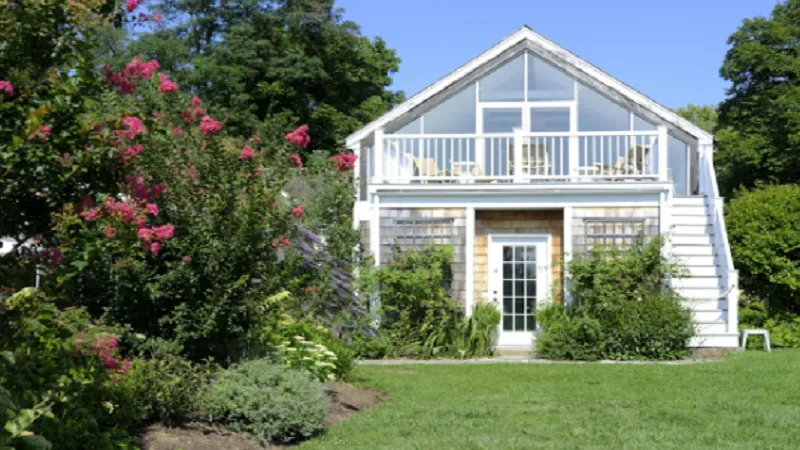
Part of this shift is being driven by homeowners looking beyond traditional housing models. Rather than upsizing or relocating, many are exploring ways to make better use of the space they already have. This is where concepts like a custom granny flat design in Sydney have gained traction. Instead of treating additional dwellings as an afterthought, they’re now being approached as tailored, purpose-built solutions that align with both lifestyle and long-term planning.
The reason why flexibility is becoming a necessity.
The housing in urban settings used to be quite predictable: one family, one main house, and a structure that played out in order to be stable in the long-run. That model begins to become obsolete.
The life of people is no longer linear as it used to be. Professions become dynamic, family has transformed, and remote working has removed the separation between the workplace and home. A house that is not adapting to these changes quickly is soon constricting.
A flexible house is in response to this fact. It enables spaces to be reused, redesigned, and reformulated without involving significant upheaval. It opens space in which homeowners can be adjusted, instead of being put in a fixed arrangement.
This is not only convenient, but it is getting imperative.
The Rise of Multi-Use Spaces
Among the most visible consequences of this change, one can distinguish the emergence of multi-use spaces.
Rooms are no longer single-purpose. An extra bedroom can be used as a home office. A separate building can be used as a guest house and also be used as a rental house. Even the outside space is planned to serve more than one purpose.
This will maximize the benefits of each square metre. That efficiency is important in an urban setting where the area is limited.
However, it is not only about fitting more into less space, but it is also about the development of environments that are purposeful. The most flexible spaces do not seem to be compromised. They are treated as important, and the layout and features accommodate various purposes without compromising comfort or quality.
Housing That Changes with Life Stages.
The other important force in flexible housing is the movement of people in the various life stages.
A young workaholic may first lay emphasis on a workroom or rent revenue. The same space could be converted to sit a partner, a child, or even an elderly parent later. With time, it may itself revert back, as a downsizing solution, or a passive source of income.
Conventional housing is not coping with such changes. It is usually oriented on a particular time, as opposed to a journey.
Flexible housing, in its turn, is construction oriented towards change. It looks into the future needs and offers the infrastructure to facilitate these needs. This proactive strategy not only minimizes the expenditure of money on expensive renovations or relocations in the future.
City Density in No Tradeoff.
The problem with urbanization is not regarding the large quantity of people living in the same area: it is not only about adding more or subtracting more people to the same space, but also about the quality of life.
A way of attaining this balance is through flexible housing. It increases capacity without congestion by adding secondary dwellings, flexible layouts, and multi-purpose areas.
More to the point, this does not necessarily need to be at the cost of privacy. Flexible housing that is well planned is very keen on separation, just like connection. Staffed entrances, sensitive location, and intelligent landscaping help to establish a space that is unique, even on the same property.
In this way, urban centers can expand in a more effective manner and at the same time preserve the feeling of livability.
The Economic Argument in Favour of Flexibility.
In addition to the good lifestyle, the financial case in favor of flexible housing is very strong.
The real estate with multiple purposes is more likely to become interesting. Consumers are seeking more in a home, be it rental, extended family, or workspace.
To the homeowners, it will result in immediate and long-term value. An elastic arrangement is able to cover the cost of a mortgage with rental profits, it can decrease the necessity to rent external offices, and raise the total attractiveness of the property.
It also offers some financial strength. In case of a change in circumstances, like a change in the number of people or the employment of an individual, the property can be changed. That type of inherent flexibility is a major plus in unpredictable markets.
Design Is Leading the Change
With increased demand in terms of flexibility in the housing industry, design is increasingly becoming a key factor.
It is not about generic solutions. The homeowners are seeking areas that can depict their unique needs and preferences. This implies models which are designed to be most useful, materials which are durable and attractive, and features which serve many purposes.
The focus on flow inside and outside is also strong in the space, as well as in the interiors and exteriors. One should also make sure that good design does not imply flexibility at the expense of comfort or cohesion.
This is also a space that technology is beginning to affect. The housing is becoming more adaptable and sustainable with smart home systems, modular building techniques, and energy-saving solutions.
A Cultural Paradigm Shift in the way we live.
The shift to flexible housing is a change in culture on the most fundamental level.
Individuals are now highly valuing autonomy, balance, and conscious living. They desire areas that embrace their way of life, and not determine it. They desire to have freedom to change, experiment, and develop without being bound by the environment.
This change is especially more apparent among cities where space and cost pressures are the most dramatic. Homeowners are no longer accepting constraints; instead, they are finding creative ways to operate around them.
The direct reaction to that mentality is flexible housing.
Looking Ahead
This pattern of flexible housing is not slowing down. It is, on the contrary, gaining momentum.
With the further development of the urban population, the necessity of flexible and effective ways of living will become even more pressing. With this, policies, planning structures, and design innovation will adapt to it, and therefore, it is easier to initiate flexible housing policies.
We are currently witnessing the tip of a deeper change- a global one that is altering the traditional beliefs of what the home should become.
- See Related: Lower Back Pain Isn’t Always About Your Back
Final Thoughts
The trend of flexible housing in the cities does not simply concern practicality. It is concerning redefining the use of space, the design of homes, and the lifestyle of the people.
Change is always present in the world, so having a flexible nature is one of the most desirable qualities a home may possess. That is what flexible housing provides, and it provides them in such a way that they are not only satisfying the existing needs but also anticipating the future ones.
And in the process, it is quietly reinventing the future of city life.