
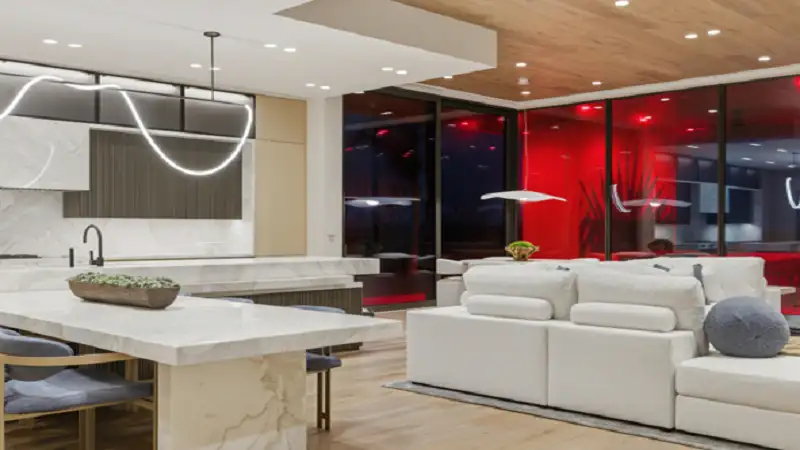
Live home tours used to be a side feature. Today, they’re the main event. Agents are going live on Instagram and TikTok, walking through properties while buyers watch, comment, and ask questions in real time. These streams don’t just build awareness; they generate leads instantly.
But there’s a problem. Phone footage captured during a live walkthrough rarely looks good enough to reuse as listing media. Lighting shifts from room to room. Windows blow out. Colors drift. What viewers see live doesn’t translate well once the stream ends.
That gap is pushing the industry toward a new workflow: zero-latency HDR. This is where an online AI real estate photo editor becomes essential, not after the shoot, but during it.
Why Live Streaming Changed the Editing Timeline
Traditional real estate photography followed a clear sequence. Shoot first. Edit later. Publish after that. Live streaming breaks this order.
When an agent goes live, the content is already public. Viewers expect quality immediately. If the footage looks flat or harsh, attention drops fast. There’s no second chance to make a first impression.
By 2026, the most effective agents don’t treat live tours as temporary content. They treat them as capture sessions. Every frame has the potential to become a listing image.
The Idea Behind HDR as a Service (HaaS)
HDR as a Service, or HaaS, is built around speed. Instead of waiting hours or days for editing, HDR processing happens almost instantly through cloud-based systems.
As footage is captured, exposures are balanced, tones are corrected, and lighting is stabilized. The result is content that looks usable the moment the tour ends.
This is where the online AI real estate photo editor changes how agents work. Editing is no longer a separate step. It’s part of the broadcast.
From Raw Phone Footage to Polished Frames
Phone cameras are powerful, but they struggle with mixed lighting. Bright windows and dark interiors confuse sensors. Live tours move quickly, so there’s no time to adjust settings between rooms.
Real-time HDR processing solves this by standardizing light on the fly. Highlights are controlled. Shadows stay detailed. Colors remain consistent as the agent moves through the property.
This doesn’t turn a phone into a cinema camera. It turns raw footage into reliable source material.
With platforms like AutoHDR, you can see this as the natural evolution of real estate visuals. They aren’t replacing photography; they’re streamlining the workflow.
Core Image Editing Still Defines Quality
Even in a zero-latency environment, fundamentals matter. Core image editing is what makes live-captured frames usable beyond the stream.
This includes placing a sky that matches the lighting conditions when exterior views are visible, masking windows so outdoor brightness doesn’t overpower interiors, correcting white balance to keep materials accurate, removing the camera or reflection artifacts when needed, and straightening frames so geometry feels stable.
These steps don’t add drama. They create consistency. And consistency is what allows live content to transition into listings.
Add-Ons That Work in Real Time
Not every enhancement fits a live workflow, but some translate well when applied carefully. Virtual twilight can help present evening moods for exterior frames captured late in the day. Grass greening supports curb appeal when lighting conditions are uneven. Virtual staging can assist with scale when rooms are empty, as long as perspective and lighting remain realistic.
What doesn’t belong here are heavy transformations. Bulk furniture removal and aggressive staging slow things down and distract from the live experience. In a zero-latency setup, simplicity wins.
Sorting and Editing Are Still Separate
Speed doesn’t mean confusion. Manual sorting still has a role, but it’s a different task. Sorting is just organizing captured frames. It has nothing to do with exposure blending or HDR processing.
Automatic HDR editing is what prepares images for reuse. Keeping these steps separate ensures clarity, even when everything happens quickly.
This separation allows the online AI real estate photo editor to focus on image quality while agents stay focused on engagement.
Why Latency Matters for Lead Generation
Live tours are about momentum. When viewers request photos right after a stream, agents who can deliver immediately win attention. Waiting breaks the flow.
Zero-latency HDR allows agents to publish listing-ready images shortly after going live. That speed turns interest into action.
And it doesn’t require expensive setups. Automated HDR workflows can cost as low as 40 cents per image, not truly 40 cents, but close enough to scale without hesitation.
The New Visual Standard for Agents
By 2026, buyers expect more than live access. They expect quality that holds up after the stream ends. Flat, uneven footage won’t meet that expectation.
HDR as a Service bridges the gap between live broadcasting and professional listings. Through an online AI real estate photo editor, agents can capture, process, and publish without delay.
We believe this workflow isn’t a shortcut. It’s a response to how real estate is actually being marketed now, fast, live, and visual first.